THE AG DRONES CROP PERFORMANCE SYSTEM — STEP 3 OF 5: APPLY
Precision Drone Application in Canada: When Timing and Field Access Matter
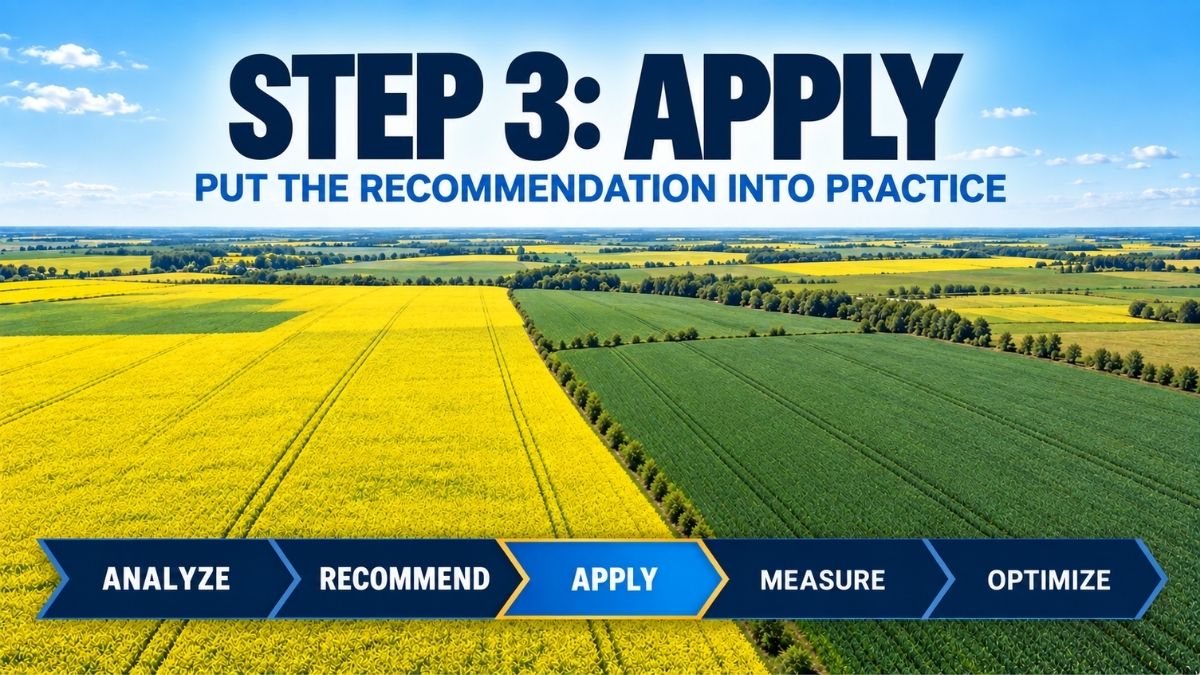
Precision drone application in Canada requires more than selecting an aircraft and planning a flight. During Step 3—Apply—the equipment, calibration, timing and operating workflow must work together to execute the agronomic recommendation effectively and responsibly.
Apply sits at the centre of our five-part cycle:
Analyze → Recommend → Apply → Measure → Optimize
A good agronomic recommendation delivers value only when it can be applied properly and on time. That is why the Apply stage is about more than owning a drone. It includes selecting the right platform, confirming the intended application is permitted, planning the mission, calibrating the system and operating within field, weather and label requirements.
Where precision drone application in Canada can fit
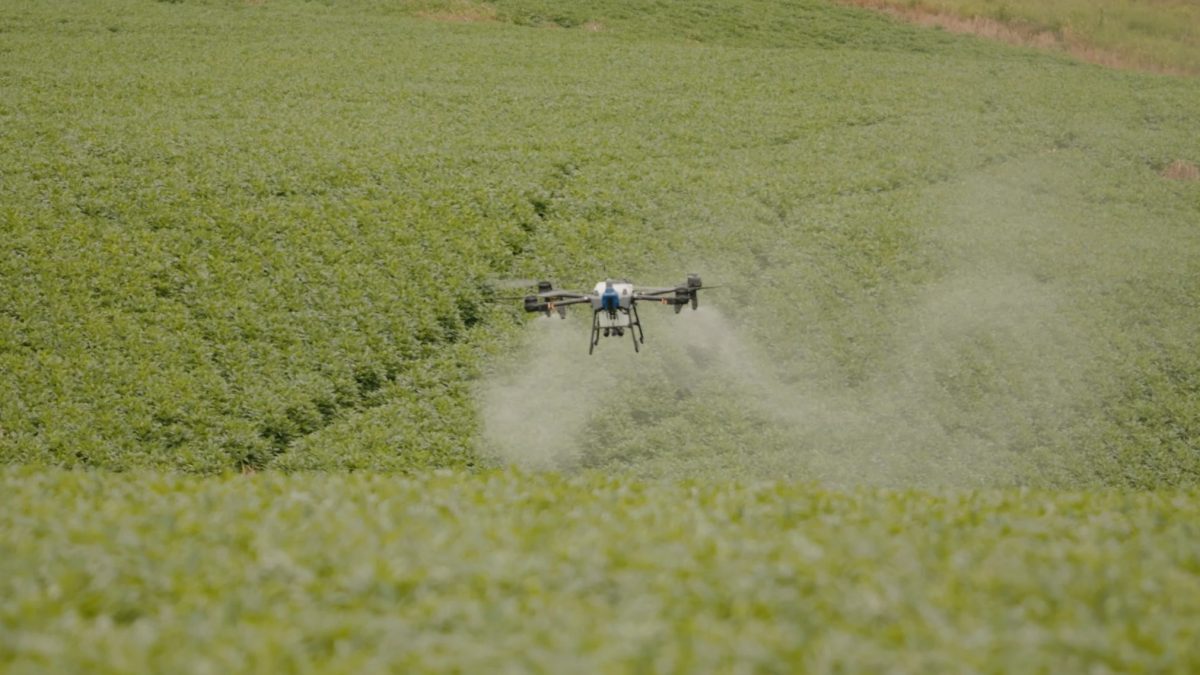
Spray drones add a flexible aerial option to the farm or application business. They can be particularly useful where ground access is limited, wheel traffic would damage the crop, terrain is difficult or an application window is narrowing. Because the aircraft travels above the crop, it can reach wet areas and irregular field features without creating wheel tracks or application-related soil compaction.
Potential uses can include fungicides, herbicides, desiccants, foliar nutrients, biological products, specialty-crop applications and granular spreading or cover-crop seeding. The exact product and use must always be confirmed against current labels and applicable federal, provincial and local requirements.
At our 2026 Alberta field demonstrations, growers were especially interested in application timing, wet-field access, automated loading workflow and the practical requirements of operating a drone as part of a complete field system. Those conversations reinforced that the value of the technology depends on how well it fits the farm’s actual applications and workflow.
Match the drone to the operation
Ag Drones offers two EAVISION platforms for different operational needs. The J150 is the high-capacity option for large farms and commercial operators, with a 75 L liquid tank, 82 kg granular capacity, up to a 15 m spray swath and published coverage of up to 65 acres per hour. The more compact J70 has a 45 L liquid tank, 50 kg granular capacity, up to an 11 m spray swath and published coverage of up to 60 acres per hour. Compare these spray drones here.
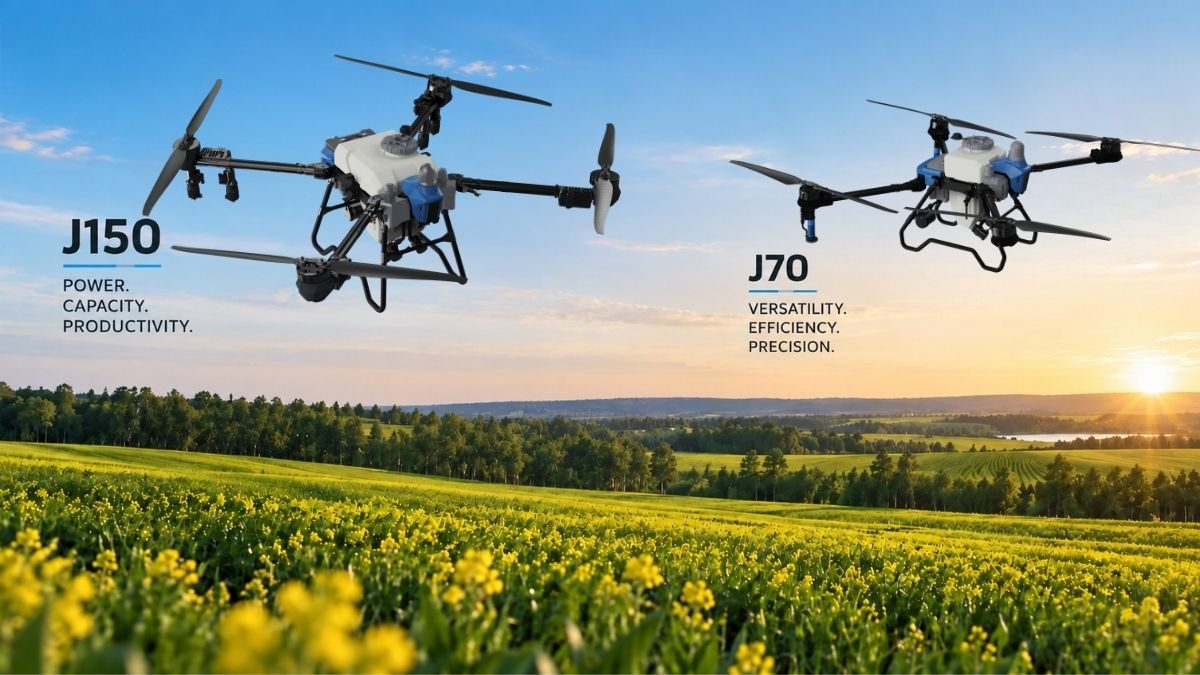
Actual productivity varies with application rate, refill logistics, field shape, obstacles, weather, battery management and operating requirements. Capacity is only one part of the decision. Transport, crew workflow, application type, field size, terrain and service support also matter.
Plan for coverage—not just speed
Effective application depends on delivering the labelled rate and required coverage under suitable conditions. Mission planning should consider flight height and speed, swath, droplet size, flow, overlap, canopy, wind, temperature, humidity, field boundaries, hazards and buffer zones. Calibration and a well-organized mixing, loading and battery workflow are central to consistent field execution.
- Confirm the crop, target and product label.
- Verify that aerial or RPAS application is permitted for the intended use.
- Follow the labelled rate, spray volume, droplet size, buffer zones and other conditions.
- Survey the site, airspace, people and obstacles before flight.
- Calibrate and document the setup for the application.
- Monitor weather and operating conditions throughout the job.
Canadian regulatory requirements must be built into the plan
Canadian drone rules depend on what is being flown, how it is flown and where it is operated. The pilot must hold the certificate required for the operation, the drone must be registered where required, and provincial or territorial pesticide requirements may also apply.
Health Canada’s 2026 guidance allows RPAS application of currently registered products when the label permits aerial application, subject to the aerial label directions and specified clarifications. If a label prohibits aerial or RPAS application, or does not permit aerial application, the product cannot be applied by drone. Always check the current label and regulator guidance before each use.
Support matters after the sale
A spray drone is an operating system, not a stand-alone purchase. Training, mission planning, calibration, maintenance, replacement parts and in-season technical help all affect confidence and uptime. Ag Drones combines EAVISION technology with Canadian-based training, parts and support to help operators build a safe, repeatable workflow.
Considering a spray drone for your farm or application business? Compare the EAVISION J70 and J150, request a quote or book a demonstration with Ag Drones.
Next in the Series
About the Ag Drones Team
Ag Drones Inc. is a Canadian source for EAVISION agricultural drone technology, training, parts and support. Powered by AgTek360, our team works with growers, operators and agricultural partners across Alberta, Saskatchewan and Manitoba, connecting field intelligence, agronomy and precision application through practical solutions designed for Canadian farming conditions.